
Why deodorant stops working after 40 — and what to use instead
6 min read · July 2026 · Kiyo Clinical Editorial
The familiar frustration
Same deodorant. Same shower schedule. Somehow, after 40, the scent still breaks through — or a new, greasier note shows up on collars and pillowcases. It feels like your products stopped working. Often, the product didn’t change. Your skin chemistry did.
What deodorant is actually built for
Deodorants reduce underarm bacteria or cover bacterial odor with fragrance. Antiperspirants slow sweat with aluminum salts. Both assume the problem starts in the armpit: moisture plus microbes. That model works for classic body odor. It does not address 2-nonenal — an oxidized fatty-acid compound that forms on skin across the body as hormone levels and antioxidant defenses shift with age.
Nonenal isn’t water-soluble and isn’t caused by sweat bacteria, so spraying more deodorant rarely fixes it. You’re treating the wrong mechanism. (Full background: What is nonenal?.)
Signs it’s nonenal, not “weak deodorant”
- The smell changed character after your 40s — mustier or oilier, less sharp.
- It lingers on fabric even when underarms feel dry.
- You notice it on the chest, back, behind the ears, or scalp — not only the pits.
- Stronger fragrance makes the mix worse, not better.
What to use instead
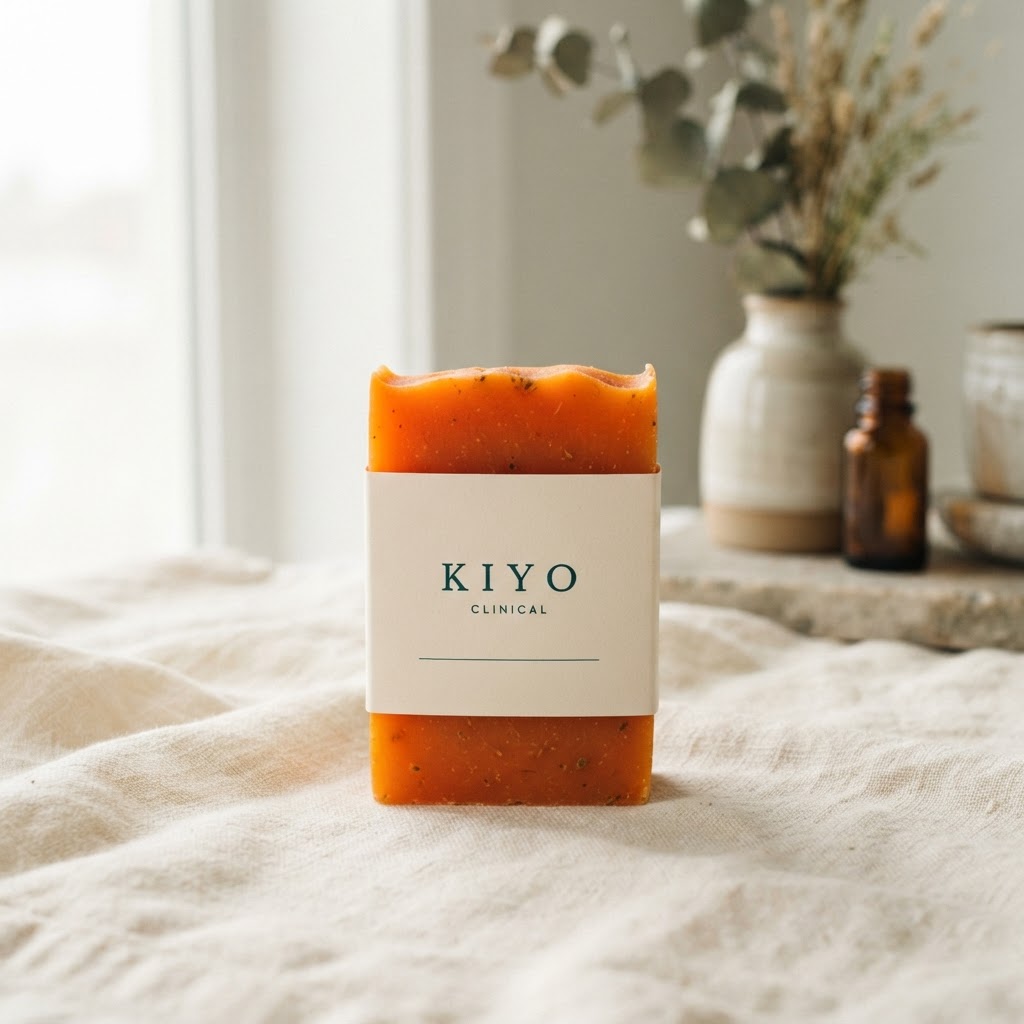
Keep deodorant if you still want underarm sweat control — that’s a separate job. For age-related odor, add a daily wash with Japanese persimmon tannin, which binds and neutralizes nonenal on contact. Focus on odor-prone zones beyond the underarms, rinse well, and dry fully before dressing.
Skip the arms race of louder scents. A fragrance-free, moisturizing bar (shea, olive oil) is gentler on skin that’s drier after hormonal change. For a step-by-step plan, see How to get rid of nonenal.
Hormones make the shift louder
Perimenopause, menopause, and andropause often coincide with the first nonenal complaints — more sweat from hot flashes, plus more of the lipid oxidation that creates the compound. If your odor changed with hormonal transition, deodorant failure is a clue, not a personal failing. More on that in Menopause and body odor.