
What is nonenal? The age-related body odor no one warned you about
6 min read · July 2026 · Kiyo Clinical Editorial
The short answer
2-nonenal is an odor compound your skin starts producing from around age 40. As hormone levels shift, the fatty acids on your skin's surface oxidize more easily — and one of the byproducts is nonenal, which has a persistent, greasy-grassy smell. In Japan, where it was first identified, it's known as kareishū — often translated, unkindly, as "aging odor."
Two things make nonenal different from ordinary body odor: it isn't caused by sweat or bacteria, and it isn't water-soluble. That's why it can linger on collars, pillowcases, and skin even with careful hygiene.
Why it starts around 40
With age — and especially with hormonal transitions like perimenopause, menopause, and andropause — skin produces more omega-7 fatty acids while its natural antioxidant defenses decline. When those fatty acids oxidize, nonenal forms. This is a normal change in skin chemistry, not a hygiene problem. It happens to everyone to some degree, regardless of how often you shower.
How to tell if you have it
- Your body odor has changed in character since your 40s — less sharp, more "greasy" or "musty."
- The smell lingers on pillowcases, hats, and shirt collars even after washing.
- Deodorant doesn't seem to address it — because it forms on skin all over the body, not just underarms.
- You notice it most behind the ears, on the chest, back, and scalp.
Why regular soap and deodorant don't work
Ordinary cleansers are built to remove sweat, dirt, and bacteria — the causes of conventional body odor. Nonenal is different: it binds to the skin's lipid layer and resists rinsing. Deodorants and fragrances simply layer scent on top, which can make the combination worse. Scrubbing harder isn't the answer either; stripping skin can increase oil production and irritation.
What actually works: persimmon tannin
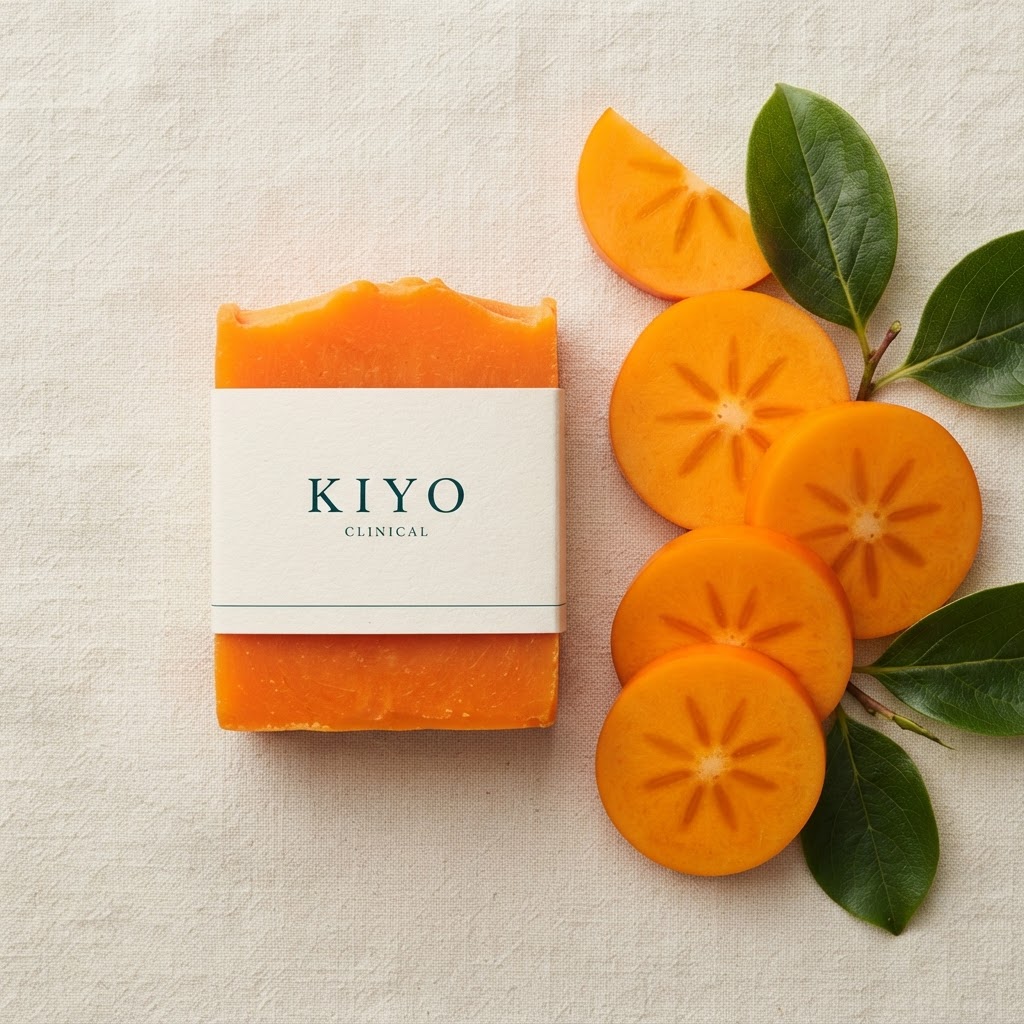
Tannin extracted from Japanese persimmon (Diospyros kaki) chemically binds to nonenal and neutralizes it on contact — an approach used in Japanese bathing culture for centuries. Used daily in a wash-off format, it removes the compound at the source rather than masking it. In our four-week self-assessment study, 92% of participants noticed less body odor within 14 days.
For the full mechanism — how nonenal forms, why it resists regular washing, and how tannin breaks it down — see The Science.
A simple routine
- Wash daily with a persimmon-tannin soap, focusing on the chest, back, behind the ears, and other odor-prone areas.
- Let skin dry fully before dressing — nonenal clings to damp fabric.
- Wash bedding and collars regularly in warm water; the compound accumulates in fabric.
- Be patient: most people notice the difference within one to two weeks of daily use.