
How to get rid of nonenal: a practical guide to age-related body odor
7 min read · July 2026 · Kiyo Clinical Editorial
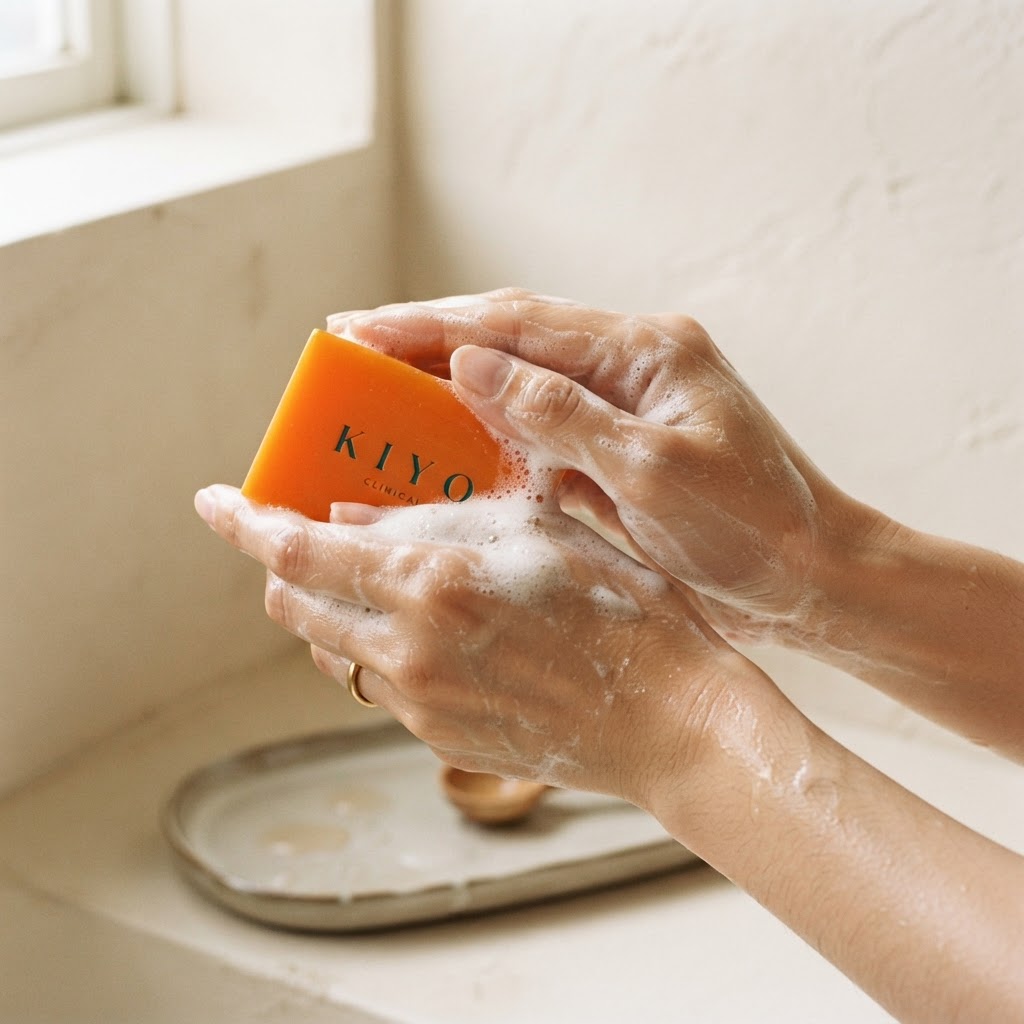
First: you can’t scrub nonenal away
If you’re searching how to get rid of nonenal, you’ve probably already tried more showers, stronger deodorant, and scented body washes. Those target sweat and bacteria. Nonenal is different — it’s a lipid-bound odor compound your skin starts producing around age 40, and water alone won’t lift it.
Getting rid of it means neutralizing the molecule on contact, then keeping fabric and skin from re-accumulating it. For the chemistry behind that smell, start with What is nonenal?.
Step 1: Switch to a cleanser that binds nonenal
Japanese persimmon tannin chemically binds to 2-nonenal and neutralizes it in a wash-off format — the approach used in Japanese bathing culture for this exact problem. Antibacterial soap, charcoal bars, and fragrance-heavy washes don’t do that job; they either strip skin or mask the smell.
Use a persimmon-tannin soap daily on the chest, back, behind the ears, scalp line, underarms, and feet — anywhere the greasy-musty note shows up. In our four-week self-assessment study, 92% of participants noticed less body odor within 14 days.
Step 2: Clear fabric that holds the odor
Nonenal clings to pillowcases, collars, hats, and sheets. Fresh skin next to stale fabric undoes your progress. Wash bedding weekly in warm water, rotate pillowcases more often if you notice a morning smell, and let clothes dry fully before wearing — damp fabric traps the compound.
Step 3: Stop stacking fragrance on top
Layering strong deodorant, perfume, and scented lotion over nonenal often makes the mix sharper, not fresher. Keep underarm products if you need sweat control, but let the cleanser do the odor work. Fragrance-free, pH-conscious bars are easier on skin that’s already changing with age or hormones.
What to expect, day by day
- Days 1–3: Skin feels clean; fabric still carries residual odor until you wash it.
- Days 4–14: Most people notice less lingering smell on skin and clothes with daily use.
- After two weeks: Keep the routine — nonenal keeps forming as long as skin chemistry produces it. Consistency beats intensity.
When to rethink the diagnosis
Sudden, strong odor with pain, itching, or unusual discharge isn’t typical aging odor — see a clinician. Hormonal shifts in perimenopause and menopause are a common trigger for nonenal; if that sounds familiar, read Menopause and body odor.